

Fresh greens guide
Which type of lettuce should you use? This overview of the nutrition, flavor, and texture of different greens will help you choose the best option for your next spring salad.
There are few things better than a fresh, crisp green salad in May after a winter full of turnips, potatoes, and beets.
Don’t get me wrong — I love root vegetables. But eating seasonally means that by the end of winter, I’m really missing all things fresh!
So when a bag of fresh greens showed up in my CSA box from Miller Farms, I nearly jumped for joy! (Read more about the benefits of Community Supported Agriculture.)
Not all greens are created equal, so when you’re choosing what to use in your favorite salad, keep in mind the flavor and texture each one brings — and how much nutrition it packs per serving.
Iceberg Lettuce
Very low in calories and comparatively high in fiber. An excellent source of vitamin K — though much lower than other types of lettuce.
Best forAs a filler, or in place of bread or a tortilla for a wrap.
Per 3 cups, raw
- 10 cal
- 1g fiber
- 8% Vit A
- 4% Vit C
- 2% Calcium
- 2% Iron
- 25% Vit K
Romaine Lettuce
An excellent source of vitamins A and K and folate. Very low in calories and comparatively high in fiber.
Best forBulk for many kinds of salads (like this Buffalo Chickpea Salad), a classic Caesar, a topping on sandwiches, or a low-carb wrap in place of bread or tortilla.
Per 3 cups, raw
- 15 cal
- 2g fiber
- 150% Vit A
- 6% Vit C
- 2% Calcium
- 4% Iron
- 110% Vit K
- 30% Folate
Red Leaf Lettuce
An excellent source of vitamins A and K. Very low in calories and comparatively high in fiber.
Best forSalad!
Per 3 cups, raw
- 15 cal
- 1g fiber
- 130% Vit A
- 6% Vit C
- 2% Calcium
- 6% Iron
- 150% Vit K
Arugula
An excellent source of vitamins A, C, K, and folate, and a good source of calcium. Very low in calories and comparatively high in fiber.
Best forAdded to salads or eaten on its own (the flavor is stronger than other greens), or as a garnish on tacos, sandwiches, or flatbreads. Try arugula in these Springtime Greens & Grains Bowls.
Per 3 cups, raw
- 20 cal
- 1g fiber
- 40% Vit A
- 20% Vit C
- 15% Calcium
- 6% Iron
- 120% Vit K
- 20% Folate
- 9% Potassium

Kale
An excellent source of vitamins A, C, and K, plus folate, calcium, and manganese, and a good source of potassium. Very low in calories and comparatively high in fiber. Baby kale is tender; mature leaves are best massaged or cooked before eating.
Best forRaw in salads, roasted into kale chips, sautéed and served with eggs, stirred into mac & cheese or lasagna, or simmered in all kinds of soup — from lentil stews to Zuppa Toscana (it holds up to long cooking times very well).
Per 3 cups, raw
- 20 cal
- 2g fiber
- 80% Vit A
- 25% Vit C
- 20% Calcium
- 8% Iron
- 230% Vit K
- 25% Folate
- 30% Manganese
- 10% Potassium
Spinach
The nutritional powerhouse of the bunch. An excellent source of vitamins A, C, and K, folate, and manganese; a good source of iron, magnesium, and riboflavin. Very low in calories and comparatively high in fiber.
Best forFresh in salad, on a sandwich, sautéed and served with eggs, steamed and topped with vinegar and salt, layered into lasagna or manicotti, folded into spinach-artichoke dip, or blended into a smoothie (it turns green, but you won’t taste it)… the list goes on!
Per 3 cups, raw
- 20 cal
- 2g fiber
- 160% Vit A
- 40% Vit C
- 8% Calcium
- 15% Iron
- 510% Vit K
- 40% Folate
- 10% Riboflavin
- 15% Magnesium
- 40% Manganese
Peas & Hoppy Meal Guides
Not sure how to use all these greens?
Let the Peas & Hoppy app do the planning — seasonal recipes, ready-made grocery lists, and smart swaps, all in one place.
Explore The App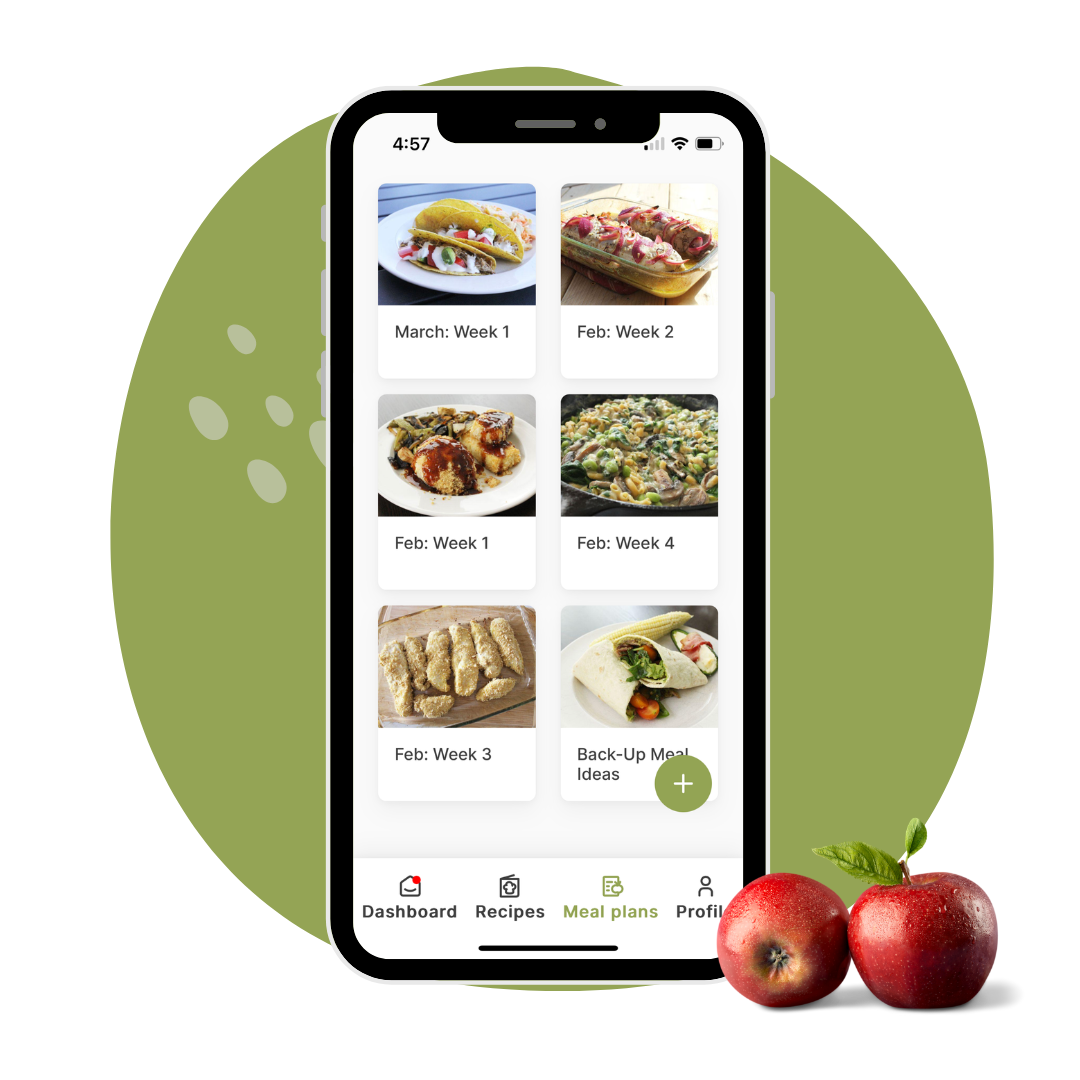
Salad recipes to put these greens to work
Looking for inspiration? Here are a few of my favorites — no bland rabbit food here. These salads are packed with flavor:
- Spinach Strawberry Mango Spinach Salad
- Kale Bacon & Brussels Sprouts Crunchy Fall Salad
- Romaine Buffalo Chickpea Salad
- Romaine & Spinach Red, White, and Blue Cheese Salad
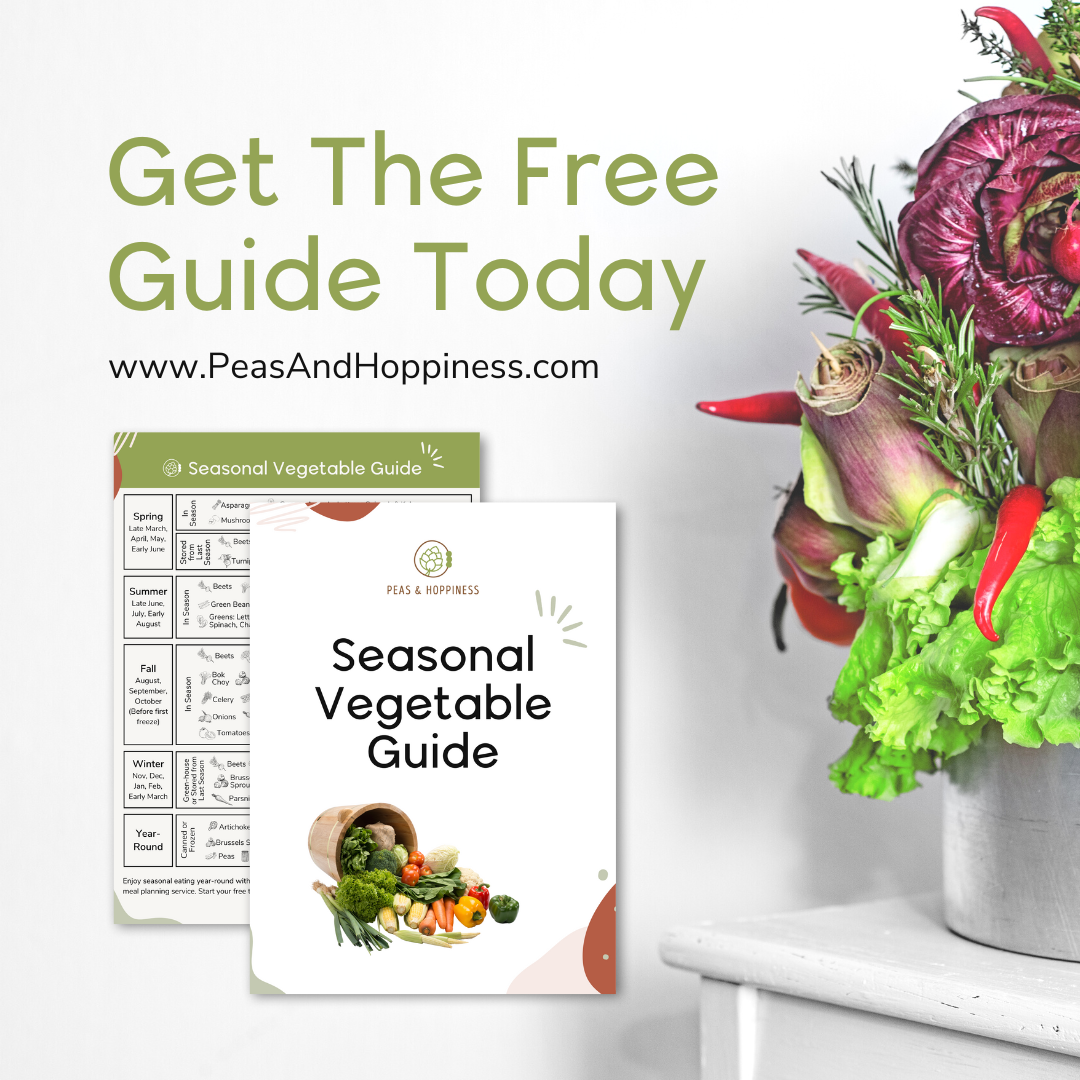
Want to learn more about eating seasonally? Grab my Seasonal Vegetable Guide so you know exactly what to pick the next time you’re in the produce aisle.
I hope you enjoy all the fresh veggies this season!
Happy eating,
Ann from Peas & Hoppiness
Eat well, the easy way
Seasonal meal plans, built for real life
Get dietitian-designed meal guides that flex around your week — not the other way around. Start in the Peas & Hoppy app today.
Explore The App